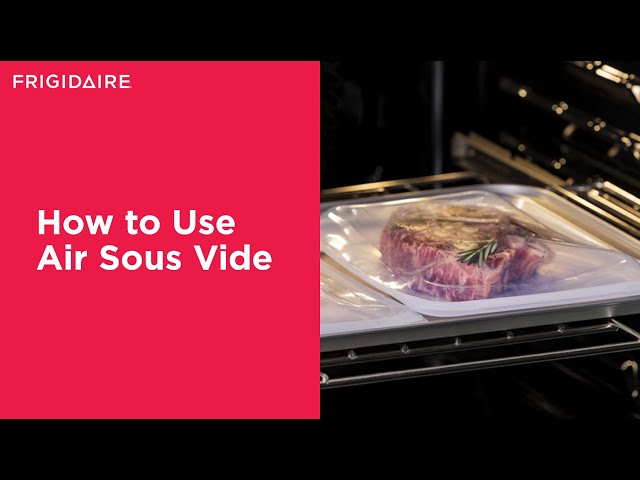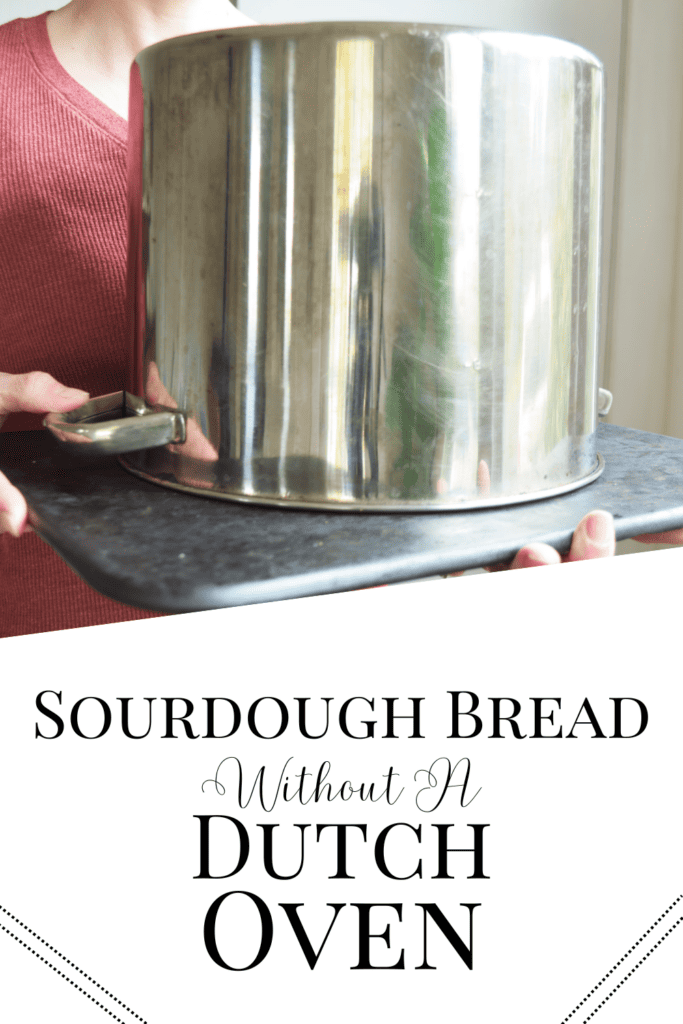
Bake on a hot stone or sheet with added steam to trap moisture.
If you want to learn how to make sourdough without a Dutch oven, you are in the right place. I bake this way week after week. You will learn clear methods, safe steam tricks, and simple steps that work in a home oven. Stick with me, and you will master how to make sourdough without a Dutch oven with bold crust and great spring.
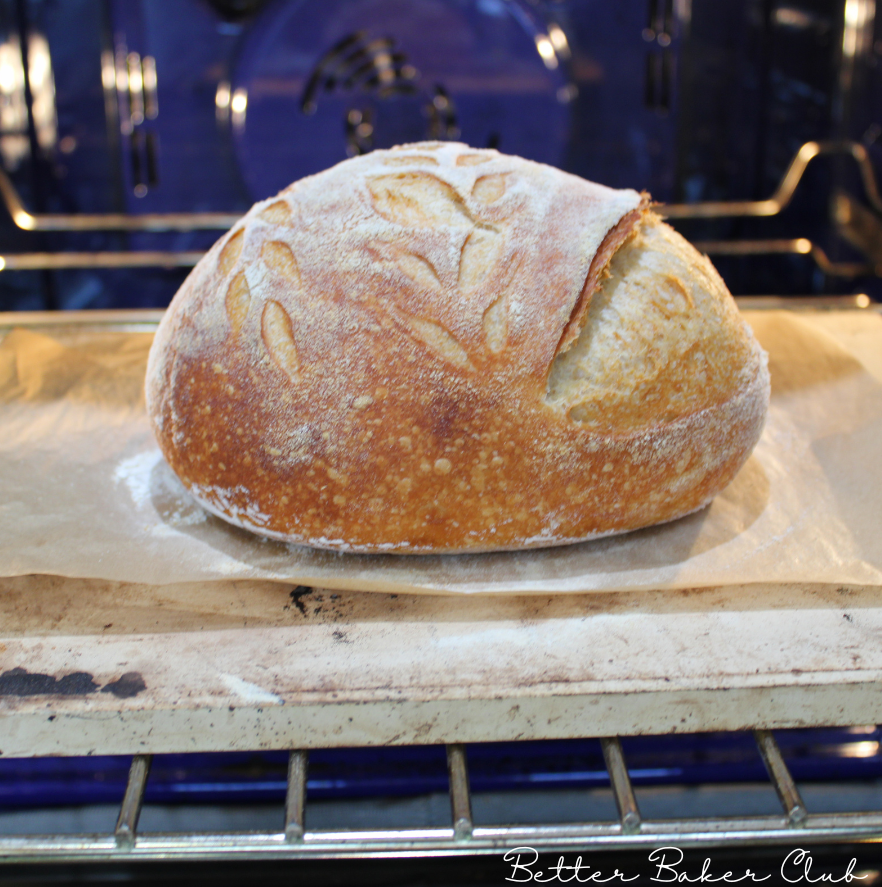
What Makes Great Sourdough Without a Dutch Oven
You can get the same results without the pot. You only need heat, steam, and strong dough. The goal is fast oven spring, thin crackly crust, and a soft but open crumb.
Key drivers:
- Strong starter. It should double after a feed and smell sweet and mild.
- Hot deck. A stone or steel stores heat and launches the loaf fast.
- Moist air at the start. Steam lets the crust stretch before it sets.
- Tight shape. Good surface tension helps the loaf lift.
- Sharp score. A clean cut guides the rise.
Baking science shows steam delays crust set and boosts volume. A hot base speeds starch gel and bloom. These facts guide every method here. They are the reason how to make sourdough without a Dutch oven is possible and repeatable.

Tools You Can Use Instead of a Dutch Oven
You do not need special gear to learn how to make sourdough without a Dutch oven. Many simple tools work well.
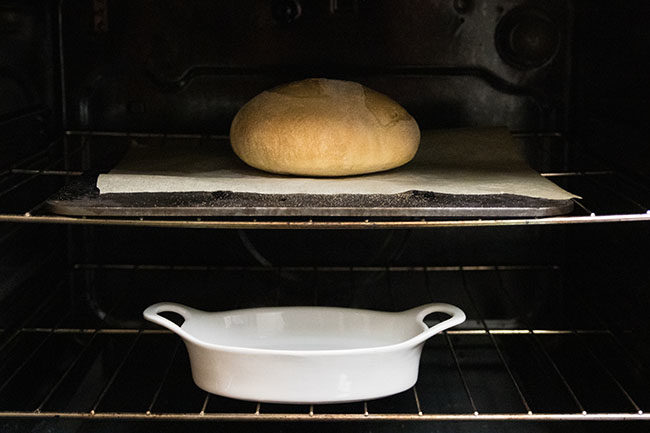
Baking stone or steel with a steam pan
- What it is: A thick stone or steel on a rack.
- Why it works: It stores heat and gives strong spring.
- Tips: Preheat at least 45–60 minutes.
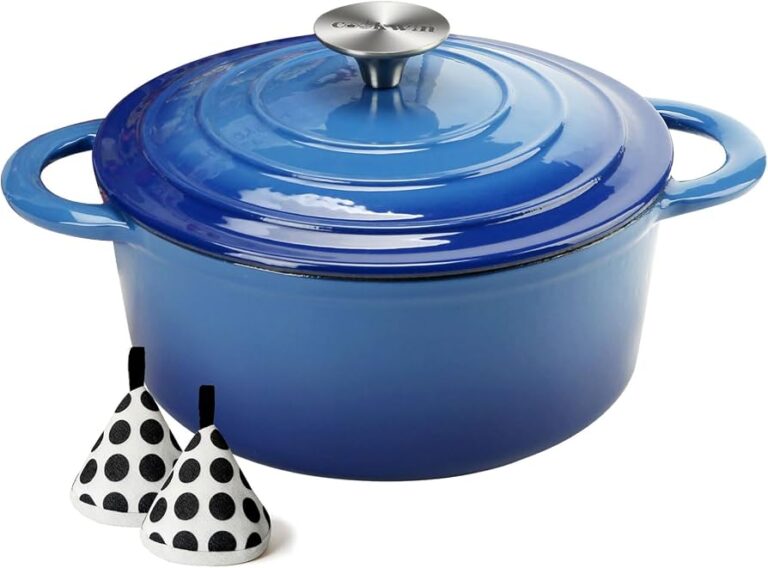
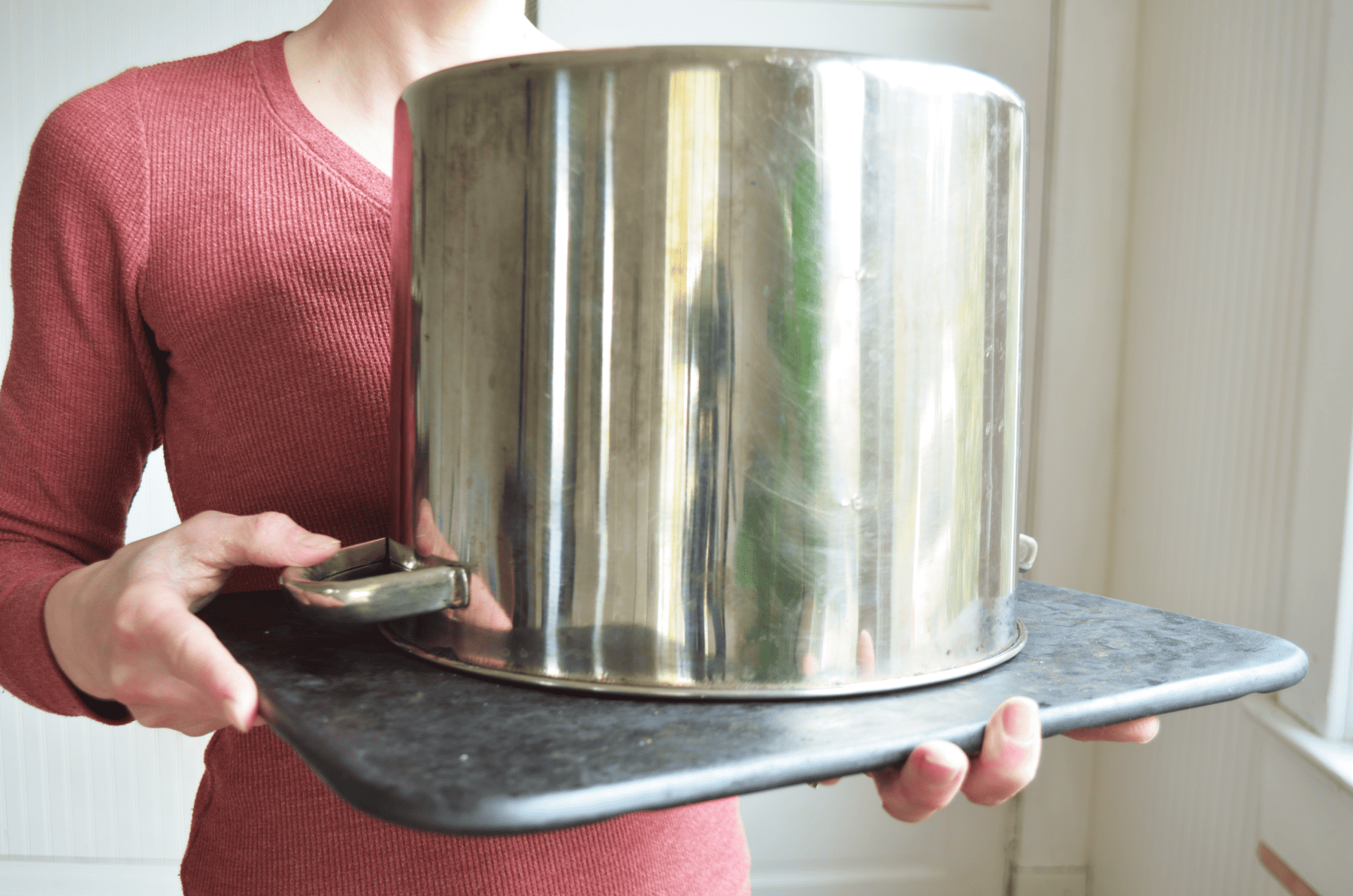
Inverted pot or roaster lid
- What it is: A large metal pot or roaster lid placed over the loaf on a stone.
- Why it works: It traps steam like a cloche.
- Tips: Preheat the cover so it does not stick.
Cast iron skillet combo
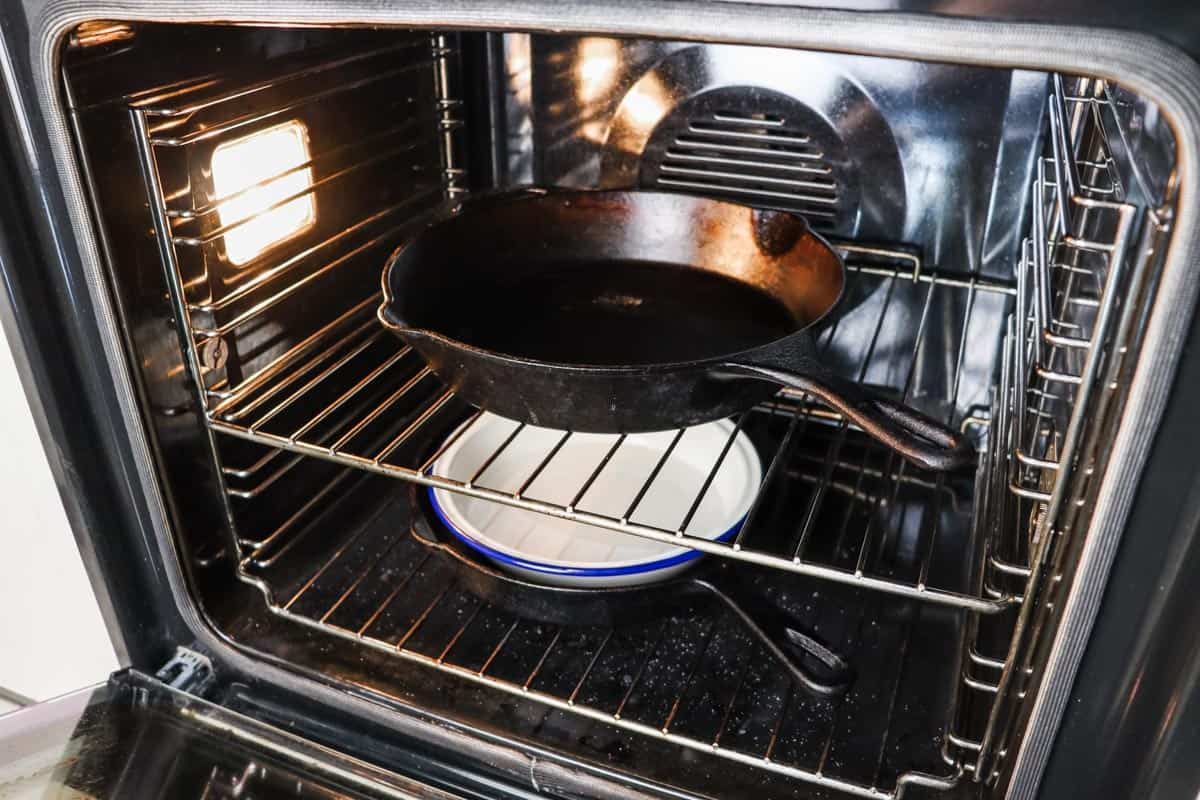
- What it is: Bake the loaf on a preheated steel or stone and place an empty cast iron skillet on a lower rack for water and steam.
- Why it works: Safe steam with strong base heat.
- Tips: Add boiling water to the skillet right after loading.
Standard loaf pan
- What it is: Shape as a sandwich loaf and bake in a greased pan.
- Why it works: The pan walls give support and even rise.
- Tips: Tent with foil for the first 20 minutes to trap steam.
Clay baker, pizza stone, or sheet pan
- Clay and pizza stone act like a hearth.
- A heavy sheet pan also works. Use an extra pan below for steam.
These setups prove how to make sourdough without a Dutch oven is simple and flexible. Pick what you have and go.
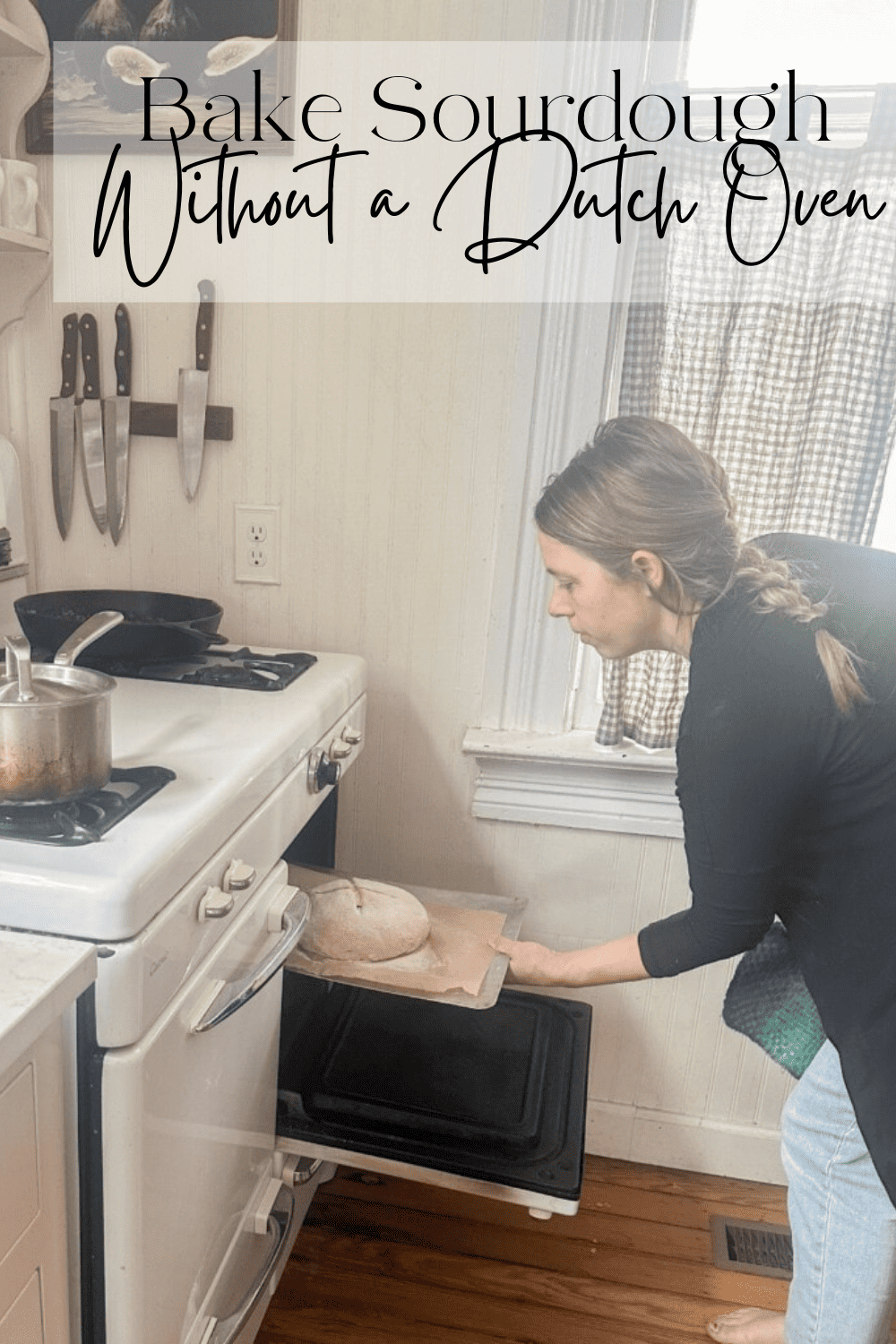
Step-by-Step Method: How to Make Sourdough Without a Dutch Oven
This is my base method for a hearth loaf. It uses a stone or steel and a steam pan. You can adapt it to any setup above.
Ingredients (one medium loaf)
- 350 g bread flour (about 2 3/4 cups)
- 100 g whole wheat flour (about 3/4 cup)
- 325 g water at room temp (about 1 1/3 cups), plus 10–20 g for bassinage if needed
- 90 g active 100% hydration starter (about 1/3 cup)
- 9 g fine sea salt (about 1 1/2 tsp)
- Optional: 10 g sugar or honey for faster browning
Timeline
- Total time: About 24 hours with a cold proof.
- Active time: About 45 minutes.
- Feed your starter
- Feed until it doubles in 4–6 hours, smells sweet, and floats in water.
- Autolyse 30–60 minutes
- Mix flour and 300 g water until no dry bits.
- Rest, covered. This boosts gluten with less work.
- Mix
- Add starter and pinch to blend. Rest 20 minutes.
- Add salt and 25 g water. Squeeze and fold until smooth.
- Bulk ferment 3–5 hours at 75°F
- Do 3–4 sets of stretch-and-fold every 30 minutes in the first 2 hours.
- Stop when the dough is 50–75% bigger, bubbly at the edge, and jiggly.
- If warm, shorten time. If cool, extend time.
- Pre-shape and bench rest
- Lightly flour the top. Turn out. Pre-shape into a round.
- Rest 20–30 minutes, seam down, covered.
- Final shape
- Shape into a tight batard or boule. Create good tension.
- Place seam up in a floured banneton or towel-lined bowl.
- Cold proof 8–16 hours
- Cover well and chill at 38–40°F. This adds flavor and makes scoring easy.
- Preheat
- Place stone or steel on middle rack.
- Put an empty cast iron skillet or heavy pan on a lower rack for steam.
- Preheat to 500°F for 45–60 minutes.
- Score and load
- Turn the loaf onto parchment on a peel or flat sheet.
- Score 1/4 inch deep at a slight angle. One long score works well.
- Slide the loaf onto the stone. Pour 1–1.5 cups boiling water into the lower skillet. Close the door at once.
- Bake with steam
- Bake 20 minutes at 475°F with steam in the oven.
- Vent steam by opening the door for a few seconds.
- Finish dry
- Reduce to 450°F. Bake 18–25 more minutes until deep brown.
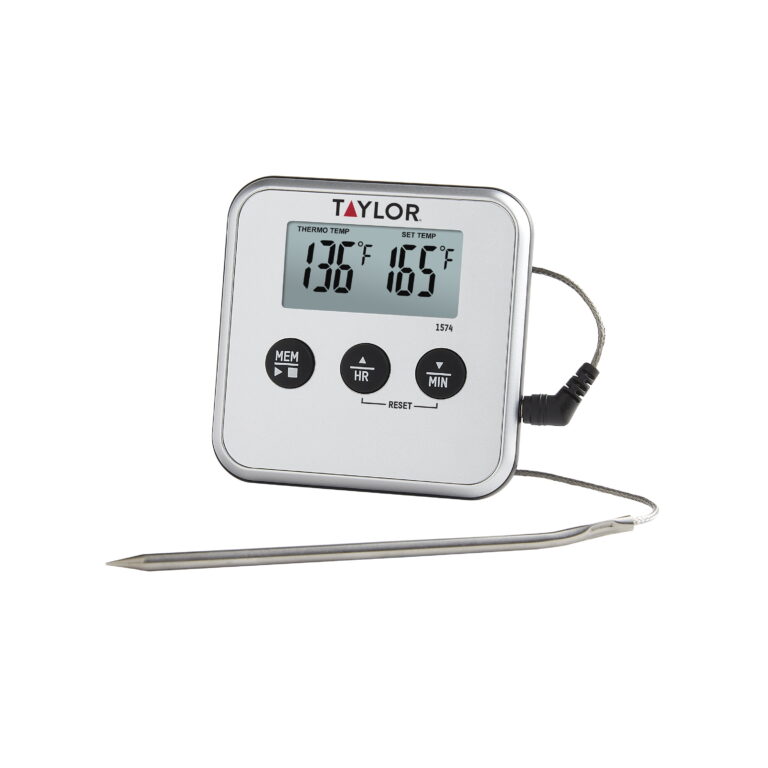
- Internal temp should be 208–212°F. The loaf should feel light and sound hollow.
- Cool
- Cool at least 1 hour before slicing. The crumb sets as it cools.
Notes for other setups
- Inverted pot: Cover the loaf on the stone for 20 minutes. Remove the cover and finish dry.
- Loaf pan: Bake 20 minutes tented with foil, then 20–25 minutes uncovered.
- Sheet pan only: Use two pans. Bake on the upper one and pour water into the lower one for steam.
This process shows how to make sourdough without a Dutch oven in clear steps. Follow the cues, not the clock, and your loaf will shine.

Steam Methods That Work in Home Ovens
Safe steam is key to how to make sourdough without a Dutch oven. Use one of these:
- Preheated skillet + boiling water. Preheat a cast iron skillet on a lower rack. After loading the loaf, pour in boiling water and shut the door fast.
- Lava rocks in a pan. Fill a metal pan with clean lava rocks. Preheat. Pour in boiling water. The rocks flash steam for longer.
- Ice cubes in a hot pan. Add a cup of ice to a preheated pan at load. Good if you do not have a kettle.
- Soaked towels in a pan. Place rolled, wet cotton towels in a metal pan. Preheat until just steaming. Refresh water at load. Do not let them char.
- Cover method. Use an inverted roaster lid or large pot over the loaf on a stone for the first 20 minutes.
Safety tips
- Use only metal or cast iron for water. Never pour water on glassware.
- Wear oven gloves. Steam burns fast.
- Keep face and hands away when you add water.
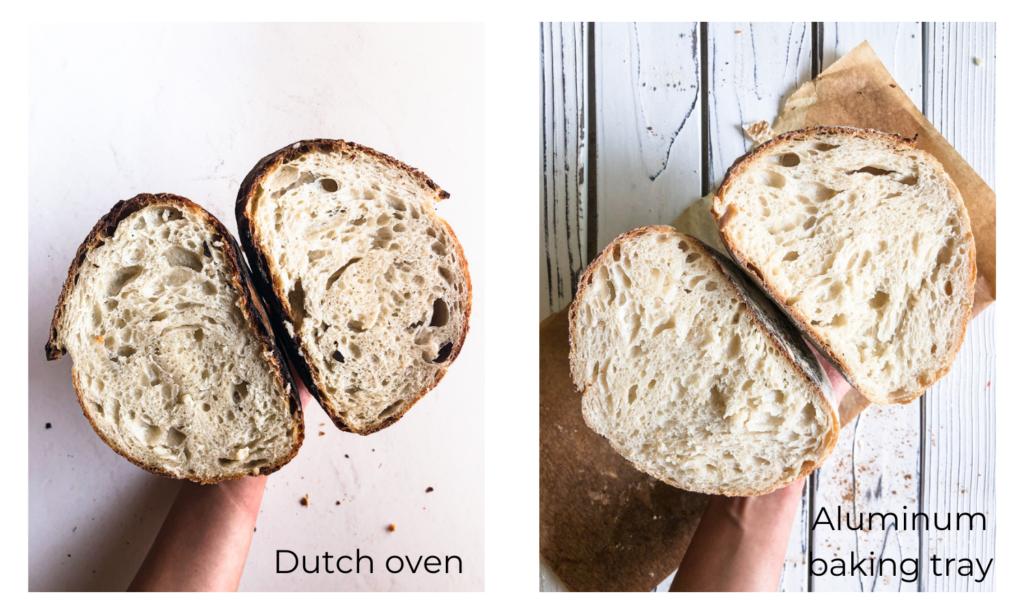
Proofing, Shaping, and Scoring for Maximum Oven Spring
When you learn how to make sourdough without a Dutch oven, dough strength is your secret tool.
Proof cues
- Bulk is done when the dough is airy, soft, and has domed edges.
- Final proof is right when a finger poke springs back slow but leaves a small dent.
Shaping tips
- Keep the top dry and the bench lightly floured.
- Use gentle but firm pulls to build a tight skin.
- Seal seams well to hold gas.
Scoring tips
- Use a sharp razor. Wet or oil the blade if it drags.
- Angle the blade at 30–45 degrees for an ear on a batard.
- One bold score is better than many small cuts.
Troubleshooting Without a Dutch Oven
You can fix most issues fast. These are the common ones when people test how to make sourdough without a Dutch oven.
- Pale crust. Bake longer, raise final temp, or add a teaspoon of sugar to the dough. Preheat more.
- Flat loaf. Under-proof or weak shape. Next time, ferment longer and build more tension.
- Dense crumb. Dough was cold or under-fermented. Let bulk rise more and proof fully.
- Burnt bottom. Stone too low or too hot. Move up one rack or use a second sheet under the loaf.
- Weak ears. Score deeper and at an angle. Add more steam in the first 10 minutes.
- Gummy crumb. Loaf not baked through. Check for 208–212°F internal temp and cool longer.
Real-World Tips From My Bakes
I learned how to make sourdough without a Dutch oven in a tiny rental kitchen. No fancy gear. Here are the habits that helped most.
- Heat matters more than tools. My biggest win was a long preheat. Sixty minutes gave me spring.
- Steam early, not late. I pour water the second I load the loaf. Then I vent at 20 minutes.
- Chill for clean scores. A cold proof gives sharp cuts and height.
- Keep a bake log. I note flour, temp, and times. Small shifts add up.
- Taste as a guide. If the loaf is bland, I let bulk run longer next time for more acid and aroma.
These simple steps show how to make sourdough without a Dutch oven can be calm and fun. You do not need perfect tools to bake great bread.
Sample Bake Timeline and Temperatures
Here is a simple plan you can follow any weeknight. It nails how to make sourdough without a Dutch oven with less stress.
Same-day start with overnight proof
- 8:00 a.m. Feed starter.
- 1:00 p.m. Autolyse.
- 2:00 p.m. Mix.
- 2:30–6:00 p.m. Bulk with folds.
- 6:15 p.m. Shape and chill.
- Next day 8:00 a.m. Preheat oven and steam pan to 500°F.
- 9:00 a.m. Score and bake. Finish by 9:45–10:00 a.m.
Warm-day fast track
- Use cooler water.
- Shorten bulk by 30–60 minutes.
- Keep proof time the same in the fridge.
Target bake temps
- Load at 475–500°F.
- Steam for 15–20 minutes.
- Finish dry at 440–460°F.

Storage, Slicing, and Reheating
Good bread keeps well if stored right.
- Cool fully before cutting. Warm bread will mash and feel gummy.
- Store cut side down on a board for one day.
- For longer storage, wrap in a clean towel or a paper bag.
- Freeze slices in a zip bag for up to 3 months. Toast straight from frozen.
- To refresh the crust, bake at 350°F for 8–10 minutes.
These habits round out how to make sourdough without a Dutch oven from mix to slice.
Frequently Asked Questions of how to make sourdough without a dutch oven
Can I bake sourdough on a sheet pan?
Yes. Preheat the pan and use a second pan below with water for steam. The loaf may spread a bit, so shape tight and score well.
Do I need a baking stone or steel?
No, but it helps. A stone or steel boosts spring and color. If you lack one, use a heavy preheated pan.
What hydration is best without a Dutch oven?
Try 70–75% hydration to start. Wetter dough can spread, so build strong gluten and shape tight if you go higher.
How do I stop a burnt bottom?
Move the stone up one rack or use a second sheet as a shield. You can also bake on parchment and reduce the deck temp a little.
Can I get an ear without a Dutch oven?
Yes. Score at a shallow angle, add strong steam, and bake on a very hot surface. Chill the shaped loaf before scoring for a cleaner cut.
How do I know my starter is ready?
It should double after feeding, smell mildly sweet, and pass the float test. If slow, keep feeding warm for a day or two.
What internal temperature signals doneness?
Aim for 208–212°F in the center. The loaf should feel light, and the crust should be well browned.
Conclusion
You now know how to make sourdough without a Dutch oven, from steam hacks to shaping moves. Build heat, trap early steam, score with intent, and trust the dough’s signs. Great bread comes from process, not gear.
Pick one method today and bake this week. Keep notes, tweak one variable, and enjoy the ride. If this guide helped, share your bake, subscribe for more tips, or drop a question so we can learn together.