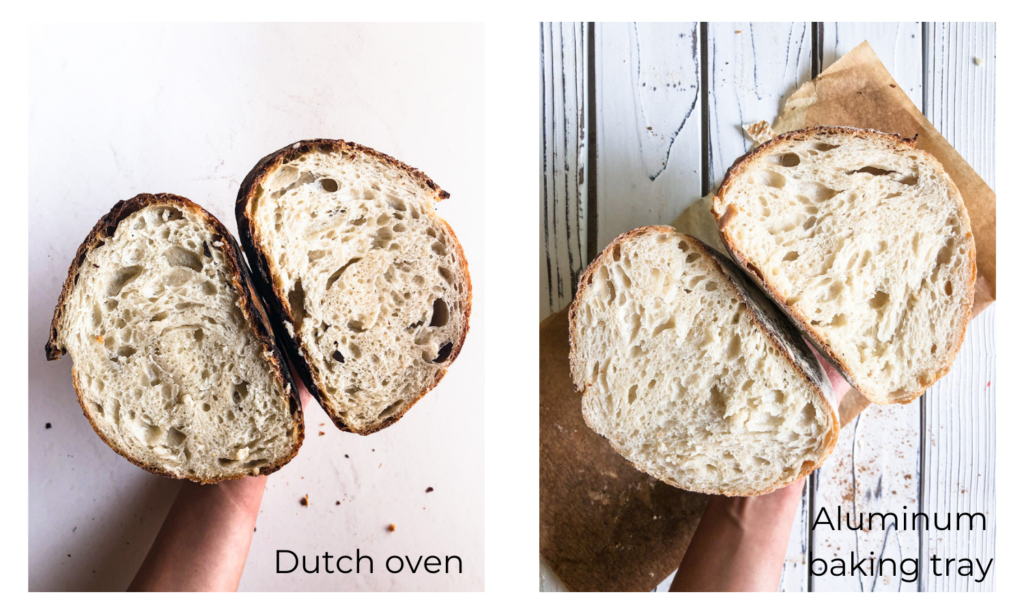
Bake stellar sourdough without a Dutch oven using steel, stone, or steam hacks.
If you want bold crust, shiny ears, and an open crumb without a pot, you can do it. In this guide, I break down how to bake sourdough without a dutch oven with clear steps, tested setups, and pro tips. I have baked dozens of loaves on steel, stones, trays, and under bowls. You will learn simple ways to trap steam, boost oven spring, and get that classic crackle at home.

Why you do not need a Dutch oven
A Dutch oven traps steam and holds heat. That is the secret. You can copy that with tools you already own. Use mass for heat. Use a cover or add steam for moisture. That is it.
Heat gives rise and color. Steam delays crust set so the loaf can expand. Once you get both right, the pot is optional. This is the core idea behind how to bake sourdough without a dutch oven. I will show setups that match a pot’s results and fit many ovens. With care, they are safe and repeatable. This is the heart of how to bake sourdough without a dutch oven at home.
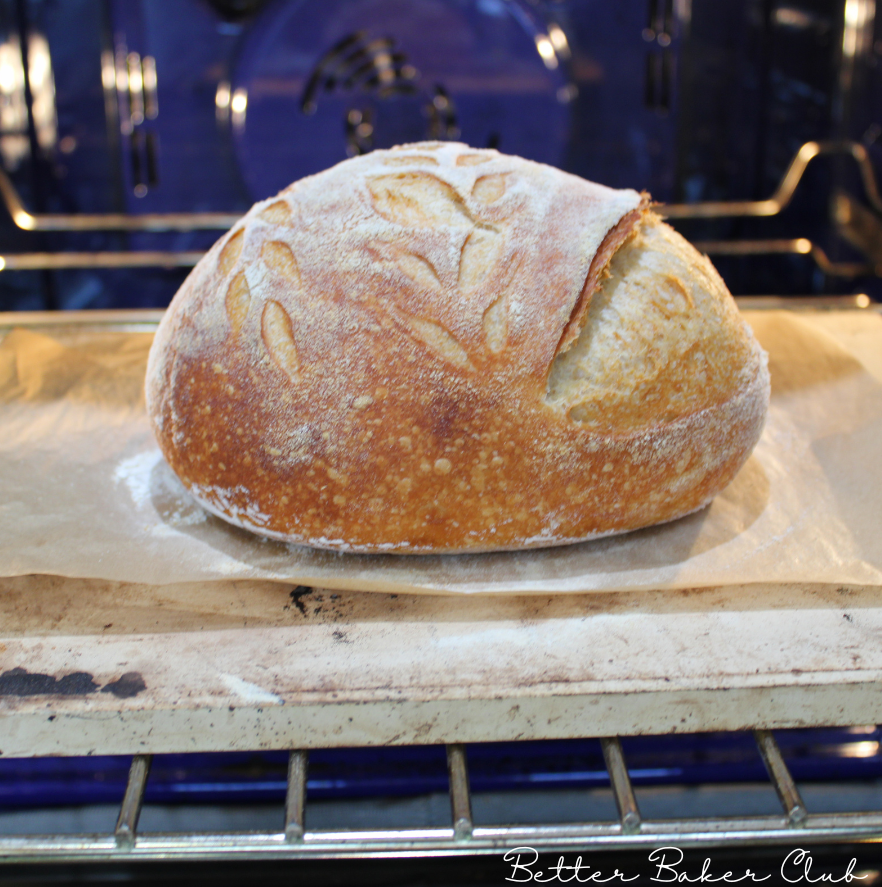
Essential tools for how to bake sourdough without a dutch oven
You do not need fancy gear. A few sturdy items go a long way.
- Baking steel or pizza stone for strong bottom heat
- Heavy sheet pan or rimmed cookie sheet
- Large metal mixing bowl to use as a dome cover
- Roasting pan or deep hotel pan to invert as a lid
- Cast iron skillet and a wide pot lid that fits over the loaf
- Parchment paper for easy loading
- Peel or a flat board to slide the dough
- Razor or lame for scoring
- Instant-read thermometer to check doneness
- Oven thermometer to verify real oven temp
- Spray bottle and heat-safe pan for steam
- Rice flour and a banneton or a towel-lined bowl for proofing
These items support how to bake sourdough without a dutch oven and help keep results steady.
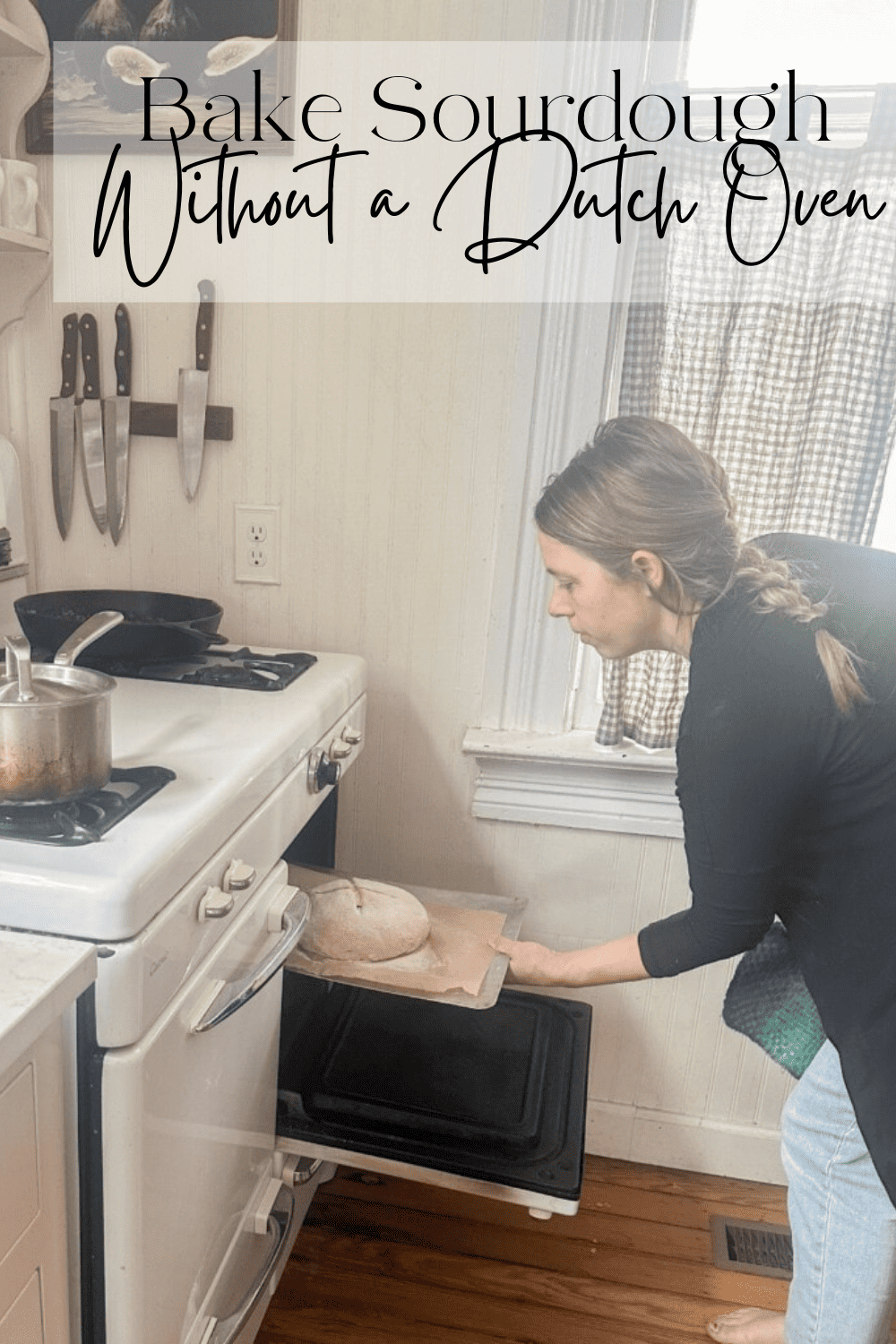
Five reliable setups that work
I have tested each method many times in a small home oven. Pick the one that fits your tools and space.
1) Steel or stone with a metal bowl “cloche”
- Preheat a baking steel or stone at 500°F for 45 to 60 minutes.
- Load the scored dough on parchment onto the steel.
- Cover the loaf with a large preheated metal bowl. Bake 18 minutes.
- Lift the bowl with mitts. Reduce to 450°F. Bake 15 to 22 minutes more.
Why it works: the bowl traps steam from the dough. The steel gives lift and a dark base.
2) Sheet pan plus inverted roasting pan
- Heat the oven to 500°F with a heavy sheet pan inside.
- Place the dough on parchment on the hot pan.
- Invert a deep roasting pan over the dough. Seal the edges.
- Steam-bake 20 minutes. Uncover and finish 15 to 20 minutes at 450°F.
Tip: if the bottom browns too fast, slide a cool sheet under the hot one.
3) Cast iron skillet with a wide lid
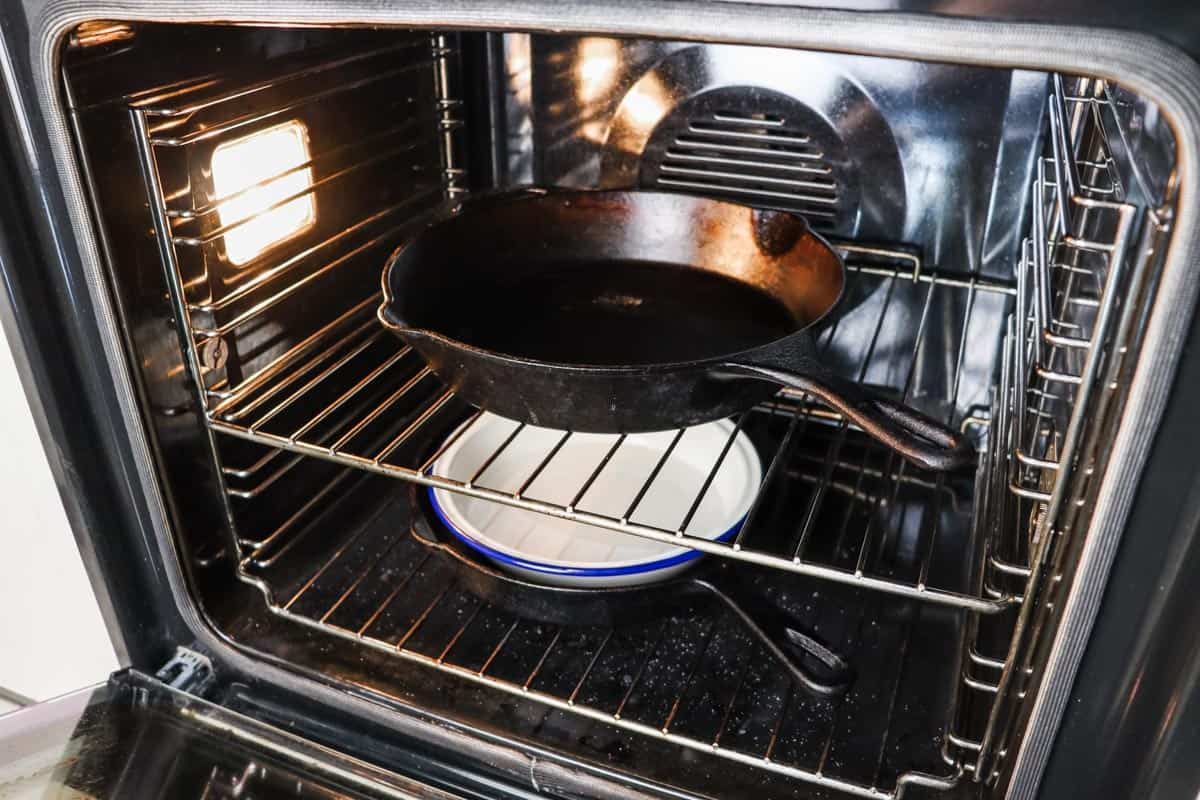
- Preheat a dry cast iron skillet at 500°F.
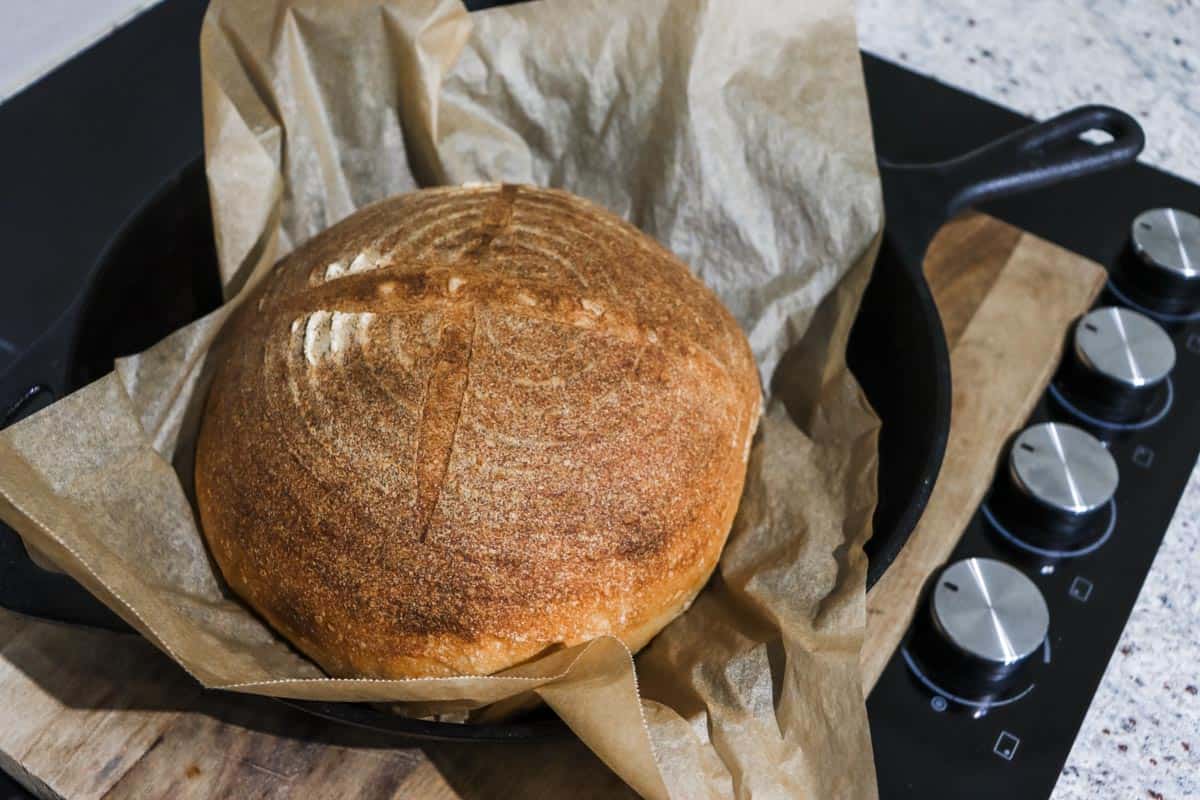
- Lay the dough on parchment in the skillet.
- Cover with a large stockpot lid or another skillet as a lid.
- Steam-bake 18 minutes. Uncover and bake 15 to 22 minutes at 450°F.
Note: make sure the lid does not touch the dough.
4) Pizza stone and steam pan
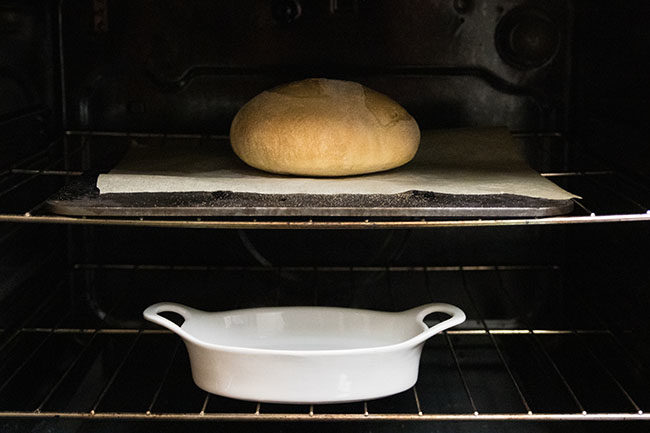
- Preheat a stone at 500°F. Place an empty steel pan on a lower rack.
- Load the loaf onto the stone. Pour 1 cup hot water into the lower pan.
- Quickly close the door. Keep steam in for 15 minutes.
- Vent the oven. Bake 15 to 25 minutes more at 450°F.
Use only metal for the steam pan. Never pour water on glass.
5) Pan loaf with a foil tent
- Shape dough into a sandwich loaf and proof in a greased bread pan.
- Preheat to 475°F. Tent the pan with oiled foil, domed, not tight.
- Bake 20 minutes covered. Remove foil. Finish 20 to 25 minutes at 425°F.
This makes great toast and deli-style slices.
Each setup shows how to bake sourdough without a dutch oven while keeping strong steam and heat. Choose the setup that matches your kitchen and comfort.

A clear step-by-step bake timeline
This timeline fits most 70 to 78 percent hydration loaves. Adjust for your flour and room temp.
- Feed your starter until it doubles and looks bubbly.
- Mix flour and water. Rest 20 to 60 minutes for autolyse.
- Add salt and starter. Mix until smooth. Rest 10 minutes.
- Do three to four stretch-and-fold sets over 2 to 3 hours.
- Bulk ferment until the dough rises 50 to 75 percent and feels airy.
- Preshape. Rest 20 minutes. Final shape and place seam side up in a banneton.
- Cold proof in the fridge 8 to 24 hours for better shape and flavor.
- Preheat your steel or stone and any covers for 45 to 60 minutes.
- Score the cold dough. Load with parchment. Add cover or steam.
- Bake covered or with steam for 15 to 22 minutes.
- Vent and finish until deep brown. Target 208 to 212°F internal.
- Cool on a rack at least 1 hour before slicing.
This plan is the backbone of how to bake sourdough without a dutch oven and still get pro results.
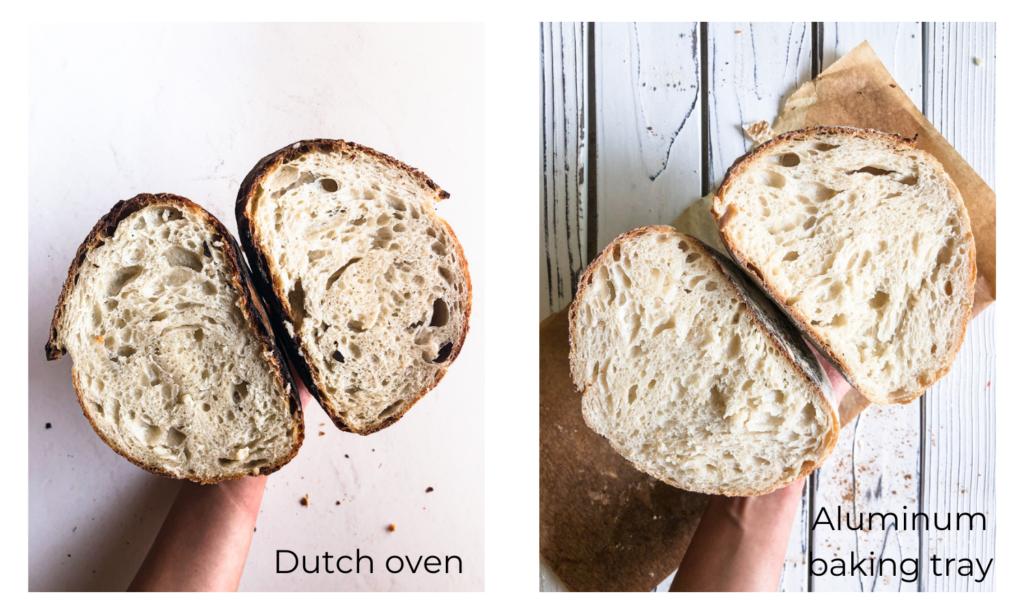
Steam and heat management that works
Steam early, then dry heat. That is the rule. In the first half, you want a moist oven. The cover or steam pan helps the crust stay elastic so the loaf can rise. In the second half, you let moisture leave to crisp the crust.
Practical steam ideas I use:
- A preheated metal pan with clean lava rocks. Pour in 1 cup boiling water at load time.
- A preheated metal bowl cover over the loaf for 15 to 20 minutes.
- A quick mist on the loaf just before covering. Do not soak it.
Avoid cold water on hot glass. Avoid ice on the oven floor. Keep your face back when you open the door. These steps make how to bake sourdough without a dutch oven safer and more steady.
Scoring, crust, and crumb tips
Score deep enough. Aim for about 0.5 inch for a main ear. Hold the blade at 30 to 45 degrees. Long scores help the loaf open where you want.
For a thin, crackly crust:
- Bake to a rich brown, not pale.
- Leave the door ajar for the last 3 minutes to dry the crust.
- Let the loaf cool fully so the crumb sets and the crust sings.
For a more open crumb:
- Do not rush bulk. Watch the dough, not the clock.
- Handle gently at shape time.
- Use strong bottom heat like a steel.
These small moves are key in how to bake sourdough without a dutch oven and still get those pretty ears.
Troubleshooting and quick fixes
Pale crust
- Bake longer after venting. Raise the rack up one level.
- Add 5 to 10 minutes at the end. Aim for deeper color.
Weak oven spring
- Make sure the steel or stone is fully preheated.
- Chill the shaped loaf. Score with confidence. Cover well for steam.
Bottom too dark
- Place a spare sheet pan on the rack under the steel to diffuse heat.
- Drop the temp by 15 to 25°F after venting.
Blowouts on the side
- Score deeper or longer. Underproofing can also cause this.
- Give the dough 10 extra minutes at room temp before baking.
Gummy crumb
- Bake to 208 to 212°F internal. Rest until cool before slicing.
These fixes reflect my own test bakes while learning how to bake sourdough without a dutch oven in a small oven.
Safety and oven care
High heat and steam need care. A few rules keep you safe and protect your oven.
- Use only metal pans for water. Never pour water on glass or the oven floor.
- Wear dry, thick mitts. Steam burns fast.
- Open the door slowly and stand back when venting steam.
- Keep covers and bowls stable. Preheat them on the rack you will use.
- Check your oven manual for steam guidance and max temps.
These habits make how to bake sourdough without a dutch oven a calm, repeatable process.
Frequently Asked Questions
Can I bake great sourdough on a baking sheet?
Yes. Use a heavy sheet pan and an inverted roasting pan as a cover. Preheat well and keep it covered for the first 15 to 20 minutes.
What oven temperature works best without a Dutch oven?
Start hot at 500°F to load, then bake at 475 to 450°F. Adjust based on color and your oven’s real temperature.
How do I add steam without special gear?
Use a preheated metal pan with lava rocks and pour in boiling water. Or cover the loaf with a large metal bowl for the first part of the bake.
Will a pizza stone replace a Dutch oven?
It helps with bottom heat but does not trap steam by itself. Pair it with a bowl cover or a steam pan for better oven spring.
How do I stop the bottom from burning on a steel?
Place a spare sheet pan on a lower rack to diffuse heat. You can also lower the bake temp by 15 to 25°F after uncovering.
Can I bake two loaves at once without a pot?
Yes, but steam control is harder. Use a bigger steam pan and rotate loaves halfway for even color.
Is parchment safe at 500°F?
Most parchment is rated to 450°F. Use it to load, then trim edges or slide it out once the loaf sets.
Conclusion
You can match Dutch oven results with smart heat and steam. Preheat a solid surface, trap moisture early, then dry the crust to finish. Choose a method that fits your tools, and keep notes so you can repeat wins.
Start with the metal bowl over steel method this weekend. It is simple, cheap, and it works. If you found this guide useful, subscribe for more sourdough tips, or drop a comment with your setup and results.