
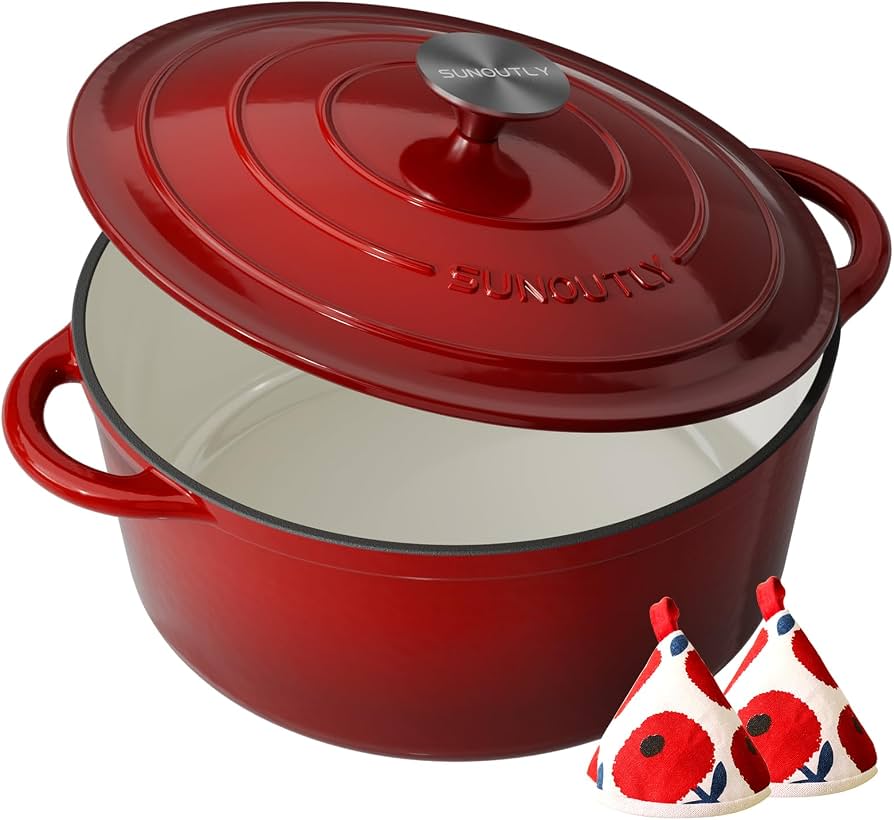
Yes. Enamel Dutch ovens are safe for everyday cooking when used correctly.
If you have wondered are enamel dutch ovens safe, you are not alone. I have tested them for years in busy home kitchens. In this guide, I explain how they are made, what the science says, and how to buy and use one with confidence. You will learn what matters, what does not, and how to avoid common mistakes.

What Is An Enamel Dutch Oven?
An enamel Dutch oven is cast iron covered in a hard glass coating. That coating is called vitreous enamel. It is fused to the iron at very high heat. The result is a smooth, non-reactive pot that holds heat well and cleans up with ease.
The interior enamel is usually light or black. The exterior can be any color. The enamel keeps the iron from rusting. It also stops iron from leaching into food. That makes it great for tomato sauce, wine braises, and desserts.

Are Enamel Dutch Ovens Safe? The Science, Standards, And What To Check
Short answer: Yes. Are enamel Dutch ovens safe under normal use? Yes, because enamel is glassy and inert. It does not react with food. It does not contain PFAS or PFOA. It does not off-gas like some nonstick pans can at high heat.
Safety also comes from rules. Quality makers follow food-contact standards. These include US food safety rules and strict limits on lead and cadmium. The inside enamel is made for food. The outside colors may use pigments, but they are not in contact with food. Independent tests from major brands show low or no detectable heavy metals in the cooking surface.
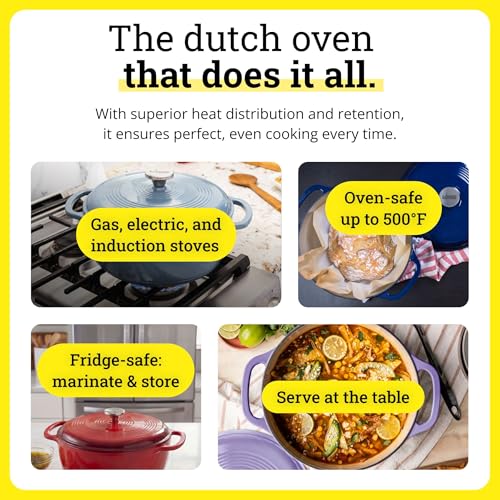
So, are enamel dutch ovens safe for acidic dishes? Yes. The enamel blocks contact with iron. Are enamel dutch ovens safe for high heat? They are safe up to the maker’s limit, often 500°F. Some lids have knobs that are rated lower. Are enamel dutch ovens safe for daily use and long cooks? Yes. That is what they do best.

Common Safety Concerns, Explained
Let’s break down the worries I hear most.
- Lead and cadmium in enamel pigments. Reputable brands meet strict limits for food-contact parts. Ask for compliance data if you are unsure. The interior enamel is designed to be safe.
- Chipping and shards. Chips can happen if you drop or bang the pot. Small chips on the rim are common and usually fine. If a chip appears on the cooking surface and sheds enamel into food, stop and assess. Replace if the chip is large or keeps flaking.
- Leaching and metallic taste. The enamel barrier stops iron from leaching. You should not taste metal, even with tomato sauce or citrus.
- Fumes at high heat. Enamel has no PTFE. It does not make toxic fumes in normal use. Do not heat it empty on high. You can scorch food or stain the enamel.
- Thermal shock. Big, sudden changes in temperature can crack enamel. Avoid pouring cold water into a hot, empty pot. Let it cool a bit first.
Are enamel dutch ovens safe if the interior stains? Yes. Stains are cosmetic. They do not affect safety.

How To Choose A Safe Enamel Dutch Oven
Use this checklist when you shop.
- Buy from a reputable brand. Look for clear testing and quality control.
- Check compliance. Look for statements that the cooking surface meets food-contact rules and strict heavy-metal limits.
- Inspect the interior. Smooth, even enamel with no pinholes is best.
- Consider the lid knob. Metal knobs handle higher oven heat than many phenolic knobs.
- Weight and fit. A heavy lid traps moisture and heat. The pot should sit flat on your burner.
- Warranty and support. Good brands stand behind their enamel if it chips early.
If you wonder are enamel dutch ovens safe from lesser-known makers, ask for recent lab results on the interior enamel. Many will share test summaries. If they cannot, choose another brand.

Safe Use And Care: Do’s And Don’ts
Treat enamel well and it will last for decades.
Do:
- Use low to medium heat for most cooking. It holds heat well.
- Add oil or liquid before heating. Preheating empty can stain or crack enamel.
- Use wood, silicone, or gentle metal tools. Lift, do not scrape hard.
- Hand wash with warm water and a soft sponge. For stains, soak with hot water and a little baking soda or oxygen cleaner.
- Dry well and store with the lid ajar to avoid odors.
Don’t:
- Shock it. Do not add cold water to a hot pot.
- Slide it on glass cooktops. Lift to protect both surfaces.
- Use harsh abrasives on the enamel interior.
- Run it under a broiler unless the maker allows it.
- Ignore chips on the cooking surface that keep flaking.
Are enamel dutch ovens safe in the dishwasher? Many are labeled dishwasher safe. Hand wash is kinder and will keep it looking better.

Benefits And Limitations Compared To Other Cookware
Why cooks love them:
- They are non-reactive and non-toxic. No seasoning needed.
- They heat evenly and hold heat for hours. Great for braises, stews, and bread.
- They go from stove to oven to table.
Limits to note:
- They are heavy. Lifting a full pot can be hard for some users.
- The enamel can chip if dropped.
- They heat up slower than thin stainless steel. For fast searing, give it a minute to preheat with oil.
Are enamel dutch ovens safe on induction, gas, and electric? Yes. Cast iron works on all cooktops. Check the base is flat for glass tops.

Personal Experience: Lessons From Years Of Use
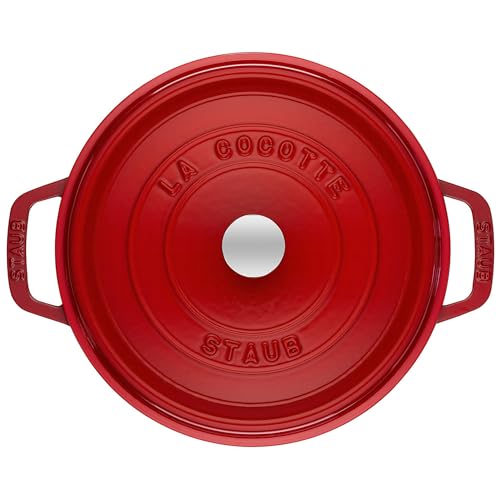
I have cooked with Le Creuset, Staub, Lodge, and Tramontina for over a decade. I have made red sauce that simmered all day. No metallic taste. No leaching. I have used them on gas, induction, and in a 500°F oven.
Once, I chipped a rim when I clipped it on a sink. It was a small chip, not on the cooking area. I kept using it with no issue. Another time, I overheated an empty pot. The interior browned. It still cooked fine, but it looked tired. Lesson learned: add oil or water first, and use medium heat. Are enamel dutch ovens safe after a stain? Yes. It is a look issue, not a safety issue.
If a brand is unknown, I email support and ask for recent heavy-metal tests on the interior enamel. Good makers reply fast. Are enamel dutch ovens safe from thrift stores? I pass unless I know the make and can inspect for cracks and deep chips.
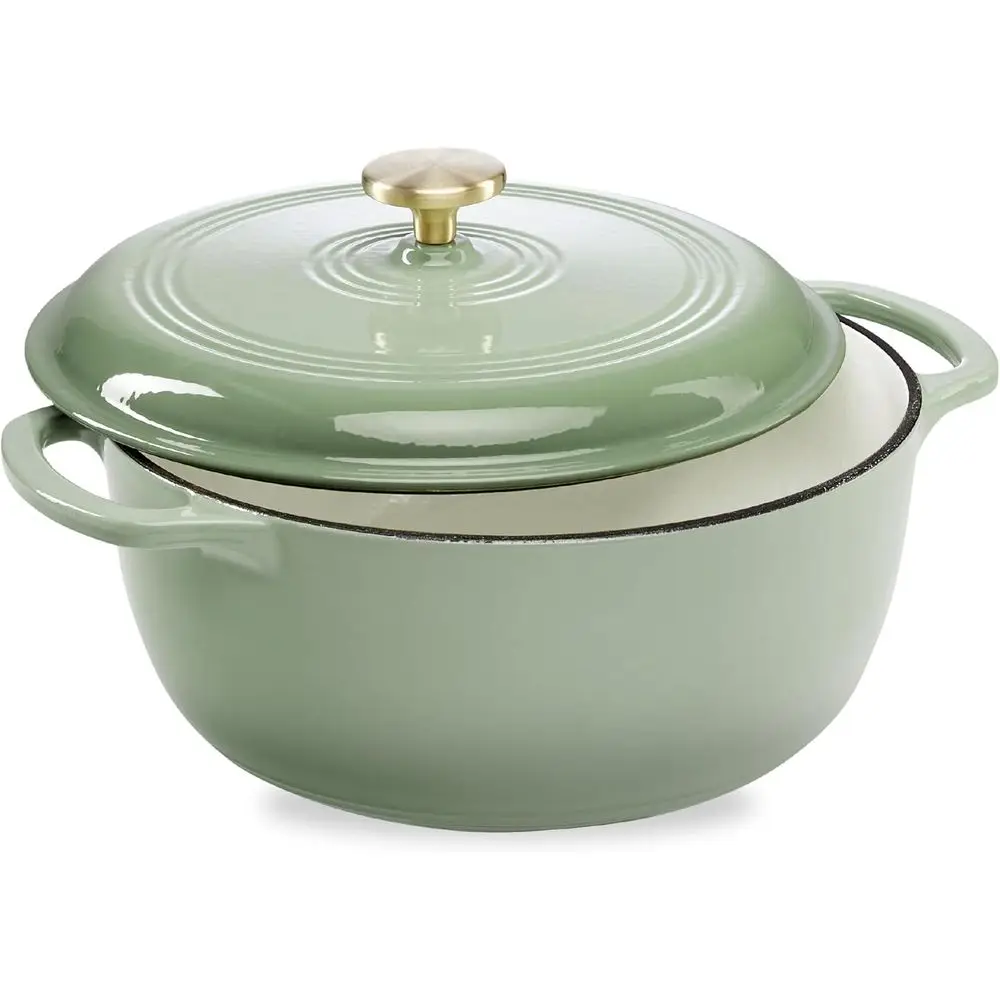
Frequently Asked Questions of are enamel dutch ovens safe
Are enamel Dutch ovens non-toxic?
Yes. The enamel is a glass-like coating that is inert and non-reactive. It does not contain PFAS or PFOA and is safe for daily cooking.
Can I cook acidic foods like tomato sauce?
Yes. Enamel blocks contact between acid and iron, so no metallic taste or leaching occurs. Long simmers are fine.
What temperature is safe in the oven?
Most are safe up to 500°F, but check your brand. Some lid knobs are rated lower, so verify before using high heat or the broiler.
Is it safe to use metal utensils?
You can, with care, but wood or silicone is kinder to enamel. Avoid hard scraping to prevent marks or chips.
What if the enamel chips?
Small chips on the rim are usually cosmetic. If the cooking surface chips and keeps flaking, stop using it for food and contact the maker.
Are they dishwasher safe?
Many are labeled dishwasher safe, but hand washing is better. It preserves the finish and reduces the risk of wear over time.
Will it work on induction?
Yes. The cast iron core works on induction, gas, and electric. Make sure the base is flat for best contact.
Do they leach iron?
No. The enamel blocks iron from contacting food. This can help if you need to limit iron intake.
Are enamel Dutch ovens safe for bread baking?
Yes. They trap steam and make a crisp crust. Preheat with the lid per your recipe and handle with care.
How long do they last?
Decades with proper care. Follow heat and cleaning tips, and avoid thermal shock to protect the enamel.
Conclusion
Enamel Dutch ovens are safe, durable, and a joy to cook with. The glassy enamel is inert, free of PFAS, and built for real kitchens. Most safety issues come from misuse, not the material. Use medium heat, avoid thermal shock, and choose a reputable brand with clear testing.
If you still wonder are enamel dutch ovens safe, use the checklist here and cook with confidence. Try a simple braise or a loaf of bread this week. Ready to dive deeper? Subscribe for more gear guides, test-driven tips, and trusted kitchen advice.


One Comment